
01
One model, a long history
The D-Max has been on sale here since 2012 and it has been through three clear phases. The early trucks carried a 2.5 litre four cylinder diesel. From 2017 the smaller 1.9 litre diesel took over, with a lighter block and better economy. The current truck moved to a 2.2 litre diesel for the 2026 model year.
That matters because the three engines behave differently and the work we do on each is not the same. Older 2.5 trucks are often high mileage now and need a careful inspection before anybody talks about software. The 1.9 is the bulk of what is on the road and it is a willing unit once the map is written for load rather than for an empty bed.
Coverage is never assumed. It depends on the exact engine and the control unit in your truck, and some vehicles we turn away, either because the unit cannot be read cleanly or because the truck is not healthy enough to be worth tuning.
Isuzu also builds lorries, sold here through a separate truck operation. Those are a different proposition entirely and outside what we do, so if your enquiry is about a seven and a half tonne N series, we are not your people and we will say so.
The model we have written about in detail is the D-Max, and it has its own page:
- Isuzu D-Max, the pickup, across all three engine generations The Isuzu D Max also has its own page covering the engine options and what the calibration changes.
Several of the models in that range have their own page covering the engines and what the calibration does for each: Isuzu D-Max.
02
What a pickup owner wants from a tune
Nobody buys a D-Max for a lap time. The reasons we hear are consistent.
Pulling away with a loaded bed, or with a trailer full of logs on a slope, is the main one. The standard map asks for a lot of throttle before the turbo does much, and a truck with a tonne of ballast behind it feels that.
Holding a gear on the A20 is the second. A pickup that hunts between gears on a gentle rise is tiring to drive all day.
Cruising economy is the third, and it is the reason a lot of fleet operators ring. We are careful here. We do not publish fuel figures, because the honest answer depends on load, terrain and how the truck is driven. What we will do is explain what a calibration changes and let you judge it on your own routes.
03
What diesel calibration actually changes
A modern common rail diesel has three things we can genuinely influence: how much fuel goes in, when it goes in, and how much boost the turbo is asked to make. The ECU remapping overview explains the whole process for anyone who wants the background first. Adjusting those three changes the shape of the power delivery, and on a working vehicle the useful change is more pull lower down rather than a bigger number at the top.
We are not going to quote you a gain, because a figure measured on a rolling road in a cool room tells you very little about a loaded truck on the M20 in July.
What we will say is that a diesel pickup with a well written map feels like a bigger engine at low speed, and that most owners notice the difference the first time they pull out of a junction with weight on.
04
Load, towing and the legal side
A D-Max is a commercial vehicle in most of the ways that count, and that has consequences.
Towing is where these trucks earn their keep, and a calibration written for towing is different from one written for solo driving. There is a fuller explanation on the towing remap page if you tow often.
Payload is not something software changes. If your truck is running at its limit already, the answer is a bigger truck, not a different file.
Insurance is worth a phone call before you book anything. Some insurers are relaxed about a calibration and some are not, and it is your policy, not ours.
A fair number of these enquiries come from a firm with two or three trucks rather than from one owner. We can look at the lot on a single visit, check each one properly, and say honestly if one of them is not worth doing. There is more on that side of the business on the van and fleet page.
05
The health check is not a box ticking exercise
Before a single line is written, the truck gets dealer level diagnostics. Every module that will talk gets read, the live figures get watched while the truck works, and on a diesel pickup we look hard at what fails on a hard used vehicle: boost hoses that have rubbed, a clogged filter, a sensor drifting, a clutch that is on its way out.
If something needs repairing, it gets repaired first and the map waits. Fitting a calibration to a sick truck is a short route to an expensive failure, and we would rather lose the booking than cause one.
Emissions faults are faults. If the truck has a warning light for the particulate filter, the recirculation system or the urea system, we diagnose it and tell you what it needs. Software is not a cure for any of those, and removing emissions equipment can fail an MOT, which nobody wants on a working vehicle.
06
Anywhere a truck can be parked
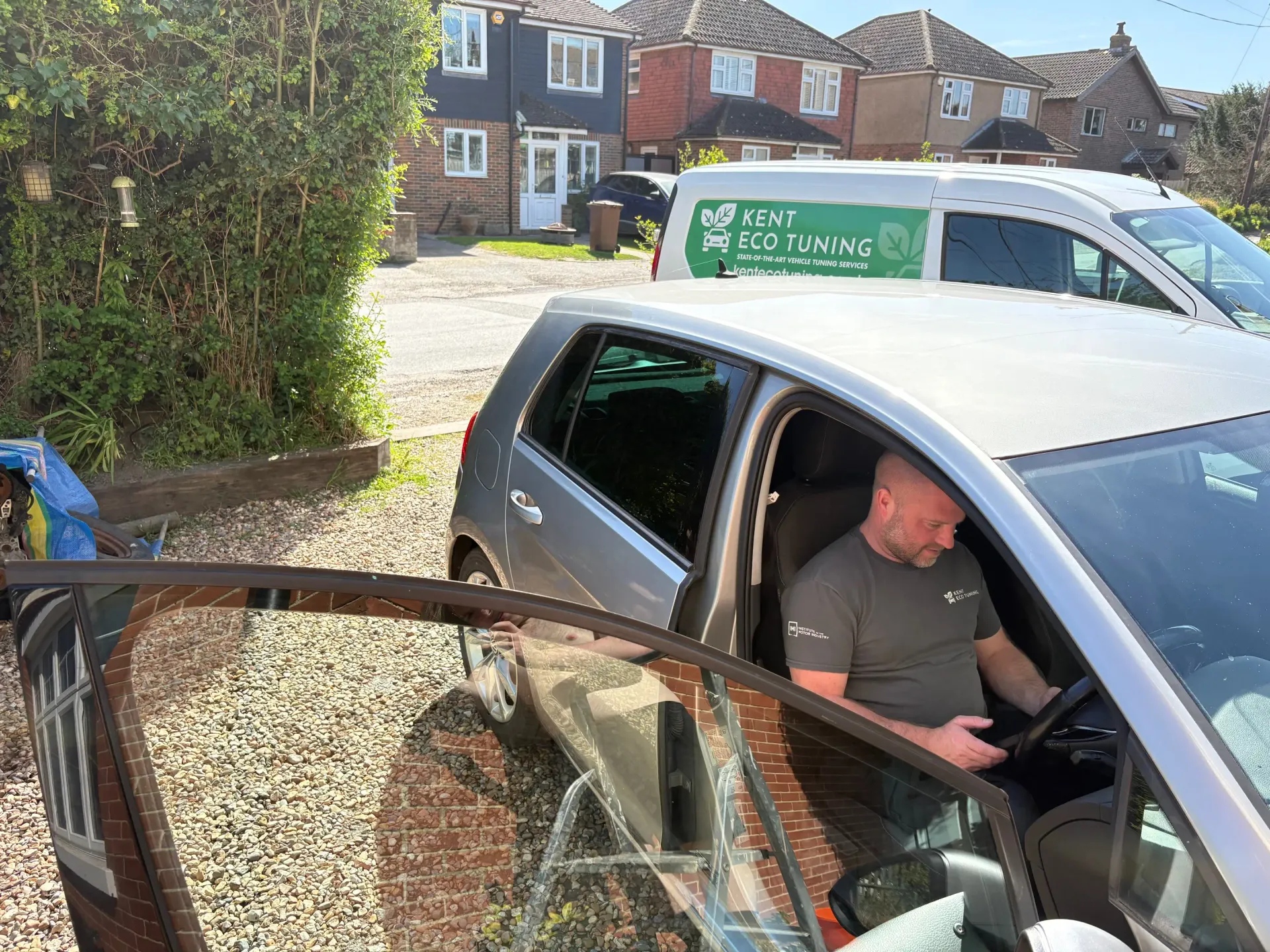
We come to you, fully insured, and the work happens where the truck lives rather than in a workshop. Farms, yards, business parks and laybys are all normal for us. Sittingbourne, Maidstone, the Medway towns, the Isle of Grain and the industrial estates around Dartford are all regular runs.
Essex is a straightforward trip over the crossing when a job takes us that way. The truck never leaves your sight, so there is nothing to transport and nothing to hand over.
07
Ring us about your truck
Call 07946 854971 with the registration and tell us what the truck does all day. That second part matters more than the first. The diagnostics page explains what the check involves, and the Isuzu D-Max goes into the engines in more detail. If you would rather not ring, the contact form on this site gets to us just the same.
08
Isuzu questions, answered
09
Is my D-Max covered?
Coverage depends on the engine and the control unit in your particular truck. Send the registration over and we will check it before anything is booked.
10
Does a tune help with towing?
It can, when it is written for that. Tell us what you tow and how often, and the map is built around that answer.
11
Do you do the 2.2 litre trucks?
We assess them individually. It is a newer engine and we will confirm what is possible on yours from the registration.