
01
Pajero is the same vehicle wearing another badge
Buyers in the UK know this truck as the Shogun. Elsewhere the same vehicle was sold as the Pajero, and underneath the badges the two are the same. That matters for tuning because the software fitted to a grey import Pajero may not match what a UK Shogun of the same age carries.
The diesels you are most likely to own are the 2.5 and the 2.8 from the earlier generations, and the 3.2 that came in later and stayed in production for a long stretch. Each was built for pulling rather than sprinting, and each answers a calibration in its own way.
Which engine, which gearbox and which market the vehicle was built for are all settled from the registration before anything else happens.
02
Written for weight behind the towball
A Shogun owner rarely asks for more top end. The request is almost always the same: make it less of a struggle with the trailer on, especially on a slip road or a long drag up the A20.
Towing torque is the calibration those owners want, and it is a different piece of work from a power file. It concentrates on what the engine does from just off idle, where a loaded vehicle actually lives, rather than on the last part of the rev range that nobody uses with three tonnes behind them.
Owners describe the change in terms of the gearbox holding a gear instead of hunting, and of the throttle needing less of a shove to get moving. The vehicle does not become quick. It becomes less tiring to drive loaded.
03
Old diesels, tired diesels, and why mileage is the wrong question
These are working vehicles with twenty and thirty years behind them. What matters is not the number on the clock but the condition underneath it: compression, injector condition, boost control, and whether the cooling system is doing its job.
A Shogun that has been serviced properly at high mileage is often a better prospect than a low mileage one that has sat unused with stale fuel and a perished hose. We look for the faults that a hard working diesel develops, including a tired turbo, leaking boost pipework, a clogged intake and worn injectors, and we do that before the map is touched.
Where something is worn, the vehicle gets a conversation rather than a file. A calibration cannot restore compression and it cannot mend an injector that is over-fuelling.
04
The DPF and EGR question on a Mitsubishi diesel
Later Shoguns carry a DPF, and on a vehicle used for short trips and heavy towing the filter loads up. A sooty EGR valve is just as common. Both are assessed on the health check before any tuning decision is taken.
A tune is not a fix for either. Where the filter is loaded, the answer is a proper regeneration or a repair, and where the EGR is choked the answer is cleaning or replacement. Software that papers over a restricted exhaust or a stuck valve simply hides a problem that will return.
Our separate pages on DPF software solutions and EGR software solutions explain where software legitimately helps. Where a warning light is already on, engine management light diagnosis is the place to begin.
05
What the visit involves, and where we stop
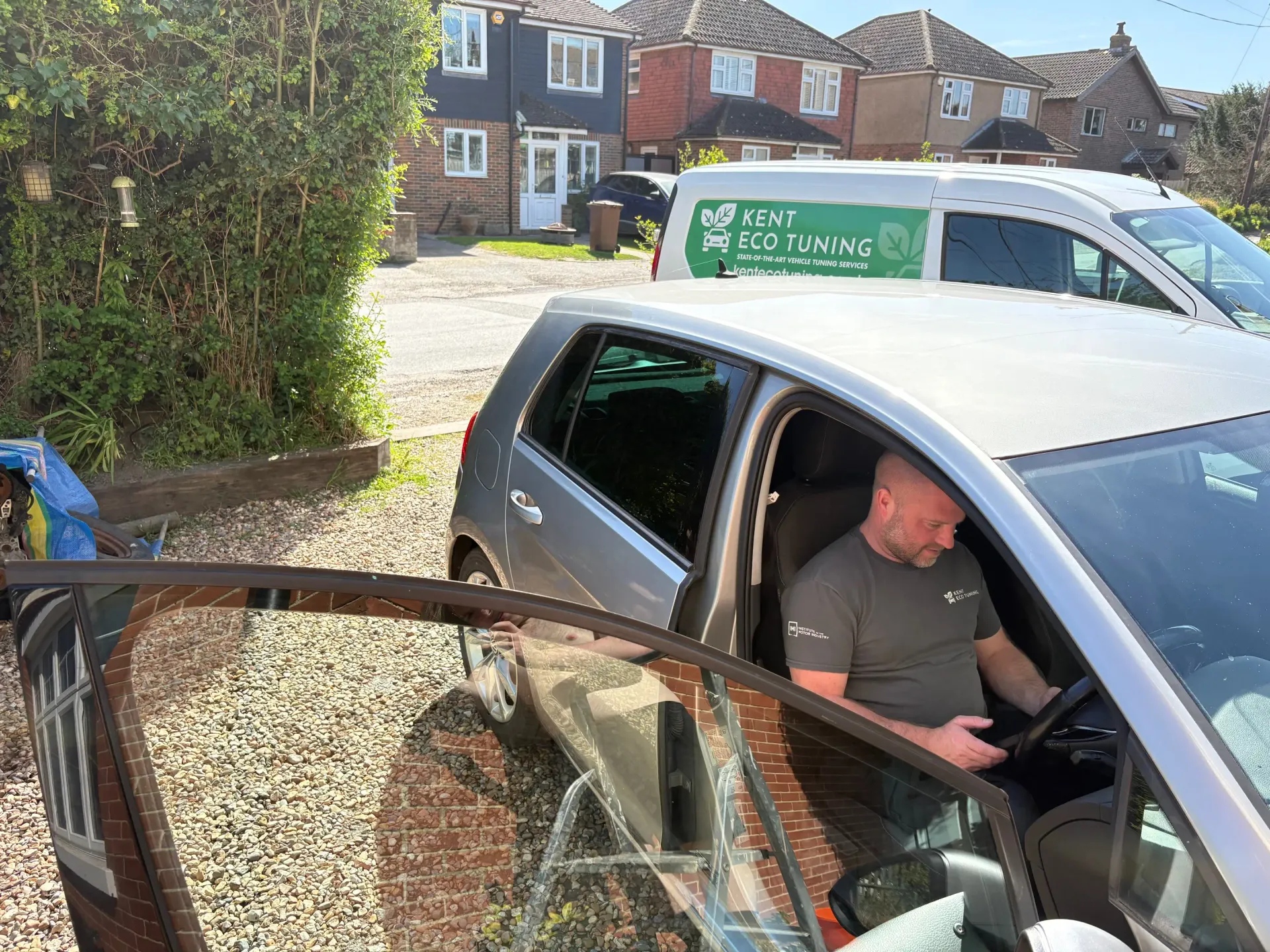
The vehicle stays where it is. Nothing is collected and nothing is dropped off, because the workshop is the van and the driveway is the venue.
The first half hour is reading: fault memory from every module, live data with the engine running, and a road run with the trailer on if one is available. That last part is worth the effort, because a diesel that behaves unloaded can tell a different story under load.
The original file is read and kept. The calibration is prepared around the answers you give about how the vehicle is used, then written and checked on a second run.
If a tuning box is fitted, or a previous map is found inside the ECU, that gets identified first. Old software of unknown origin is a reason to start from the manufacturer's own file rather than build on top of something nobody can vouch for.
Modified vehicles should be declared to the insurer, and that includes a change to the engine software. It takes one phone call and it keeps the policy valid.
There are also jobs we will not take on. A Shogun with a failing fuel pump, a cracked head or a gearbox that is already complaining needs a repair, and no amount of calibration changes that. Saying so early saves everybody money.
06
Talking it through
Ring 07946 854971 with the registration and a sentence on what the vehicle does all week. If a trailer, a horsebox or a boat is part of the answer, say so, because it changes the file. Messages through the contact form reach us just as well, and the wider Mitsubishi remapping page covers the rest of the range.
07
Shogun and Pajero tuning questions
08
Is my imported Pajero covered?
Usually, yes, though the file for a Japanese market vehicle is not necessarily the same as a UK Shogun of similar age. Send the registration and we will confirm before booking.
09
Will a tune help with fuel costs when towing?
It can help, because an engine that holds a gear and pulls cleanly is not working as hard. Anyone buying a tune purely for economy on a towing vehicle should be realistic about the return.
10
Can you remove the DPF or the EGR?
No. Removing emissions equipment is not something we do, and it can fail an MOT. Where those systems are causing trouble, we diagnose them and advise on the correct repair.
11
How long does the visit take?
Most Shogun work fits into a single visit, though an older vehicle that needs a proper look underneath takes longer. We will tell you what to expect when you book.
12
Related models
Owners often compare this with Mitsubishi ASX, Mitsubishi Colt and Mitsubishi Eclipse Cross, and each has its own page covering the engines and what the calibration changes.